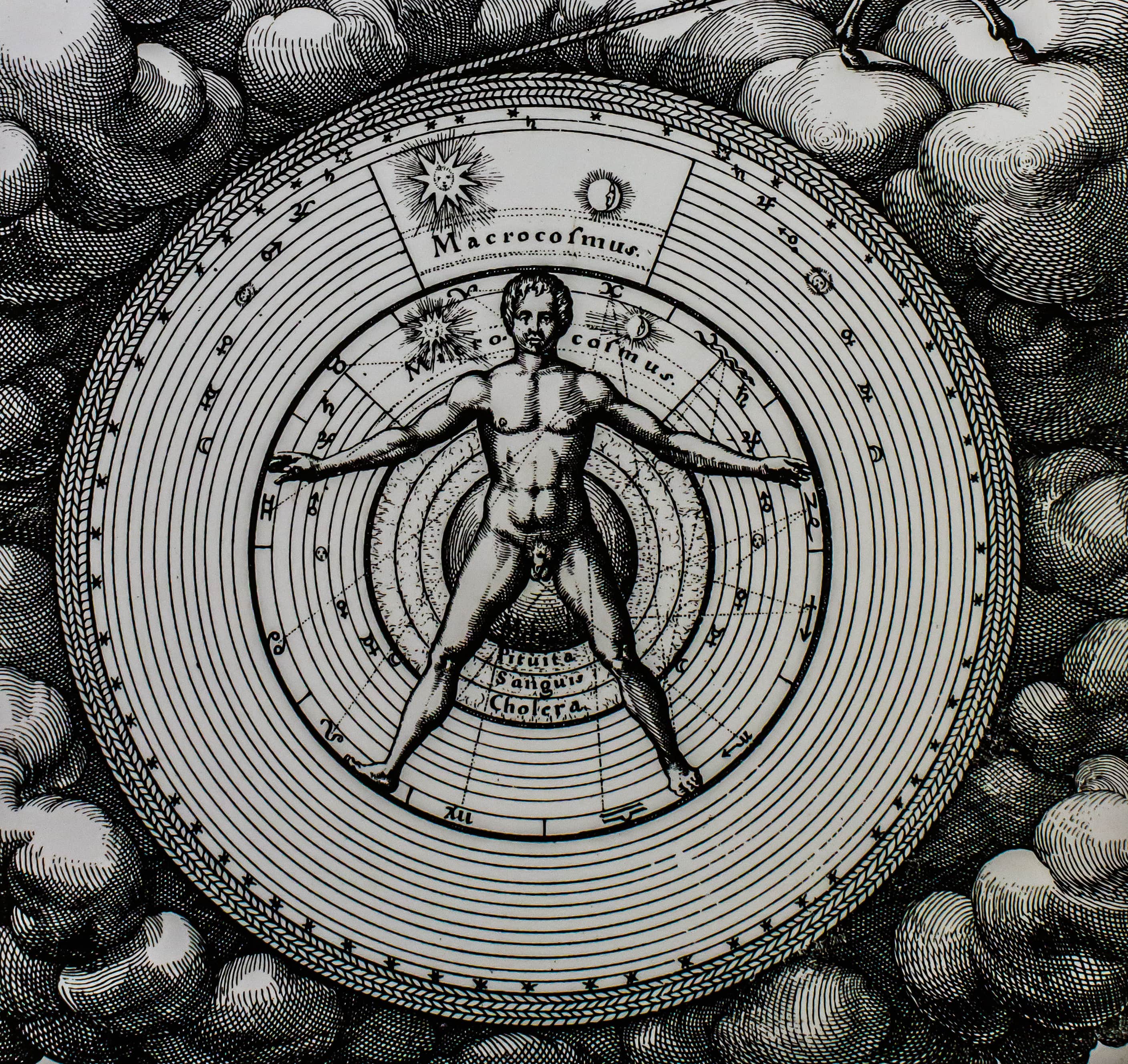
Humans are generally believed to be “plastic,” in the sense that we can adapt to radically different environments. Human culture is highly diverse and yet we appear to all share a common “human nature” (or, if you will, “human grammar”). Psychology is the study of the “psyche” – a Greek word that then becomes “anima” in Latin and “soul” in English. Yet, following the materialist turn in late-19th century science (under Electric paradigm conditions) the soul was largely discarded by modern psychology. We need to bring it back – compelling us to retrieve an earlier psychological approach. Digital technology drives us to question “What does it mean to be human?” and “What are the faculties of the human soul?” Equating humans with machines (as Print did) or computers (as Electric did) will not answer those questions. Faculty psychology will.
The most urgent question today is "What does it mean to be human?" -- forced on us by the rise of the robots (or “algorithms”). Robotic interlopers – combining hardware and software – have become impossible to ignore. Lawyers. Factory workers. Press release writers. Painters and poets. No activity/occupation has been spared. “Artificial Intelligence” (AI) has become a mega-business. Increasingly, companies want to replace workers with robots. Military organizations world-wide are trying to remove humans from the battle-field. Philosophy has gone “post-human.” Humans are wasteful, demanding and need rest. Plus they die and new ones must be hired with all the training costs implied. What if we could replace them? What if we could transition (some) humans to a radically different “nature.” Even make them immortal? What if . . . ??